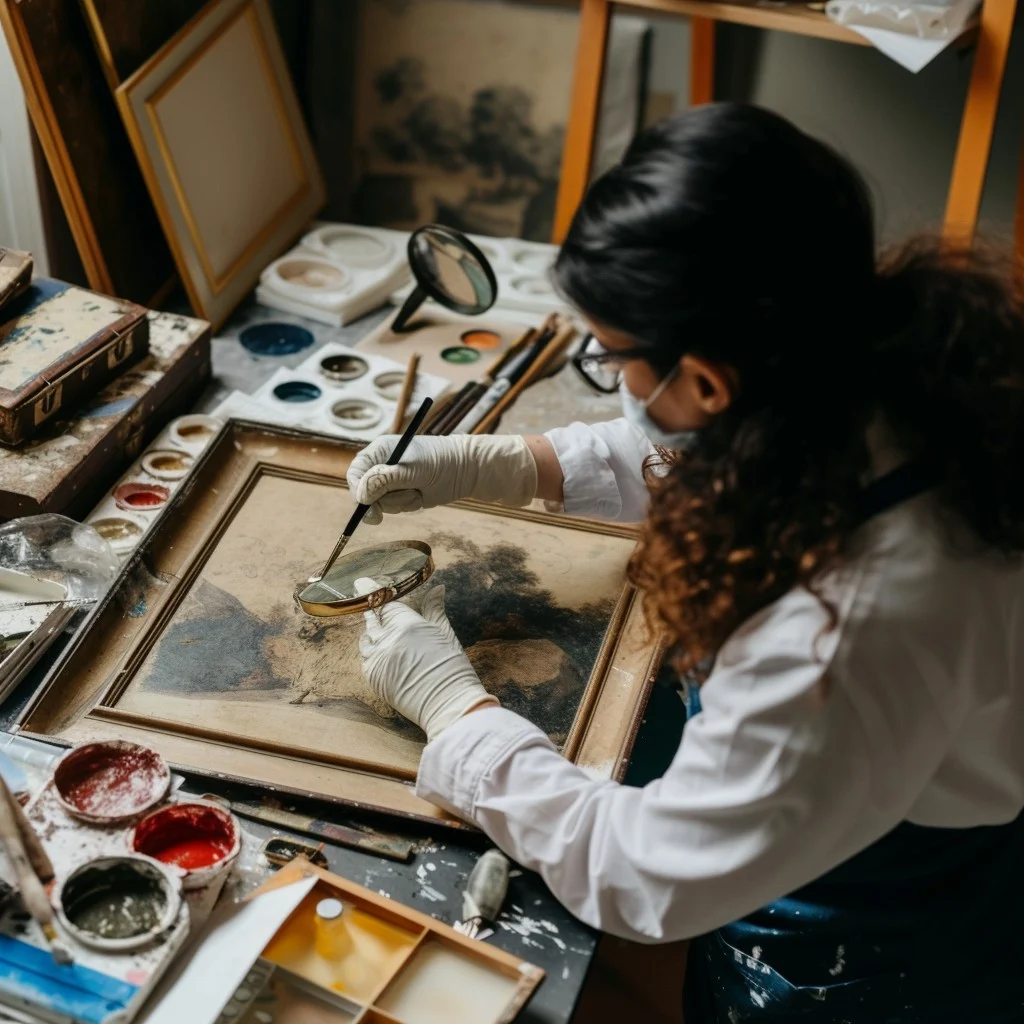
The only DNA that can survive for decades within a painting is that which is embedded in a strand of the artist’s hair. If a hair happened to fall onto the canvas and became trapped in the paint layers, it could serve as a valuable biological marker for authentication. The process of extracting and analyzing this DNA involves four critical steps.

  1. Locating a Hair The first step is to carefully examine the painting under raking light. Laying the artwork flat on a table, a flashlight is used to scan every inch meticulously trying to find a strand of hair beneath the paint.
  2. Extracting the Hair Once a hair is located, it must be extracted by a skilled painting restorer. The professional will delicately remove it while ensuring that the affected area is properly patched.
  3. Obtaining DNA from a Family Member This step is often the most challenging. Not all artists have living relatives, and those who do may not always be willing to provide a DNA sample.
  4. Matching the DNA Once both the hair and the family DNA sample are obtained, we conduct the extraction and analysis. If the hair’s DNA has not been compromised by paint chemicals, we compare it to the family DNA for a definitive match.

If you need expert assistance throughout this process, contact us.

To receive curated updates on art exhibitions, books, & films