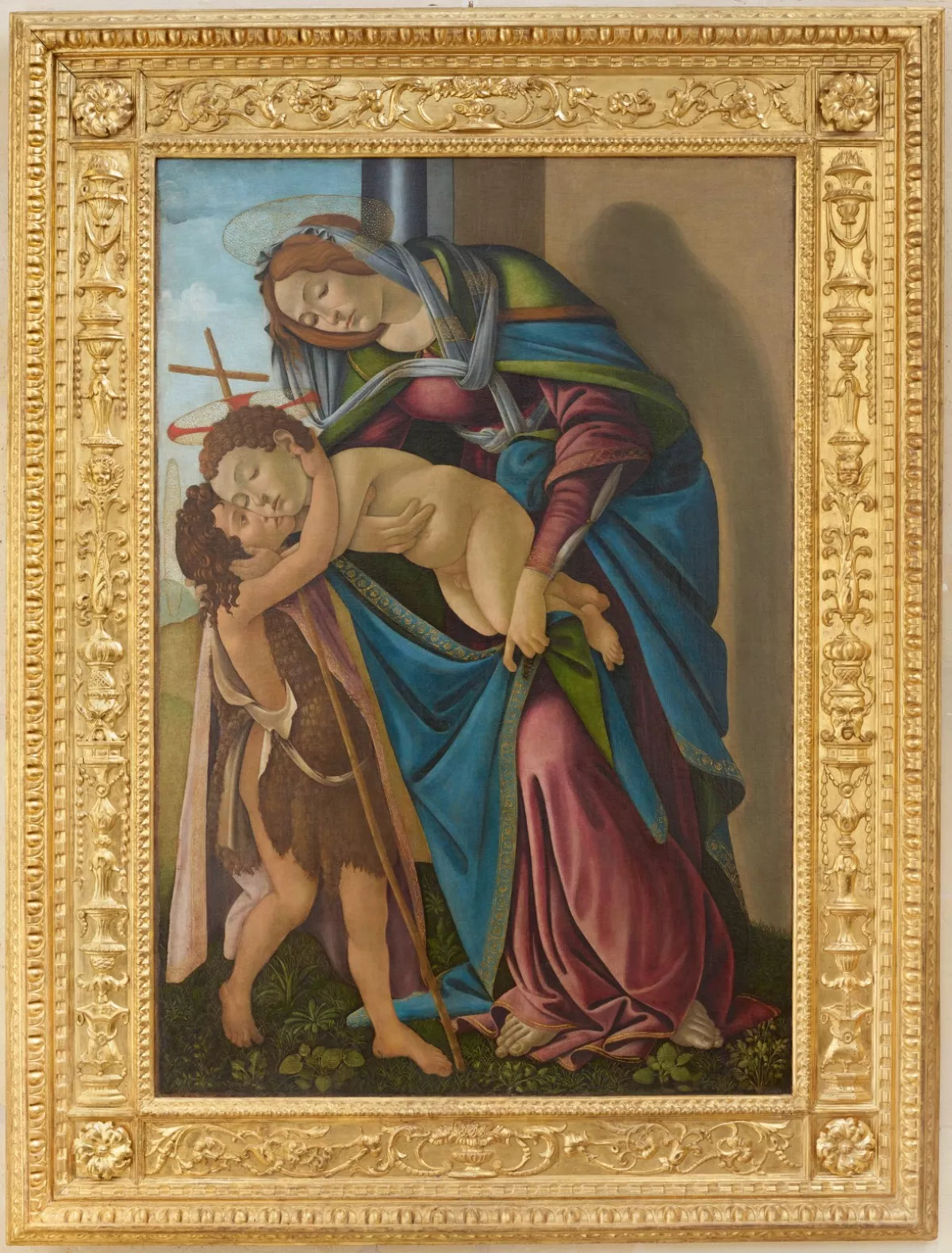
A painting that has hung unnoticed in a French church for over a century has been confirmed as a significant work from the era of Renaissance master Sandro Botticelli. Discovered in 2010 by an art curator, the painting in the Saint Félix Church in the Loire Valley initially appeared to be a 19th-century copy of Botticelli's Virgin Mary, Infant Christ, and St. John the Baptist.
However, rigorous scientific analysis revealed the painting dates back to around 1510, and that was likely produced in Botticelli's own workshop, with the master himself likely contributing to key elements. This discovery suggests that many more works by his workshop may still await recognition, hidden in private collections or religious institutions.
Born in Florence in 1445, Sandro Botticelli emerged as a master of religious and mythological themes, renowned for his graceful figures and ethereal style. His works are characterized by flowing lines, delicate colors, and a focus on idealized beauty. This distinctive style has influenced generations of artists that followed, leaving a mark on the history of Western art.
This finding is significant as it expands our understanding of Botticelli's art, and provides valuable insights into workshop practices during the Renaissance era. The painting will be showcased alongside the original Botticelli masterpiece in an exhibition at the Chapel at Chambord from October 19, 2024, to January 19, 2025.
If you believe you may know about a painting that could be connected to Botticelli's studio, we encourage you to contact our experts for further investigation.

 Languages
 简体中文
 বাংলা
 slovenščina
 繁體中文(香港)
 català
 Bahasa Melayu
 Nederlands
 svenska
 繁體中文(台灣)
 čeština
 Íslenska
 norsk
 suomi
 dansk
 Bahasa Indonesia
 polski
 français
 eesti
 日本語
 português
 Türkçe
 Deutsch
 ქართული
 한국어
 română
 українська
 Italiano
 ελληνικά
 lietuvių
 Русский
 اردو
 اعربي
 עברית
 magyar
 Slovenščina