简体中文
বাংলা
हिन्दी
मराठी
slovenščina
繁體中文(香港)
català
Bahasa Melayu
Nederlands
svenska
繁體中文(台灣)
čeština
Íslenska
norsk
suomi
español
dansk
Bahasa Indonesia
polski
தமிழ்
français
eesti
日本語
português
Türkçe
Deutsch
ქართული
한국어
română
українська
Italiano
ελληνικά
lietuvių
Русский
اردو
اعربي
עברית
magyar
Slovenščina
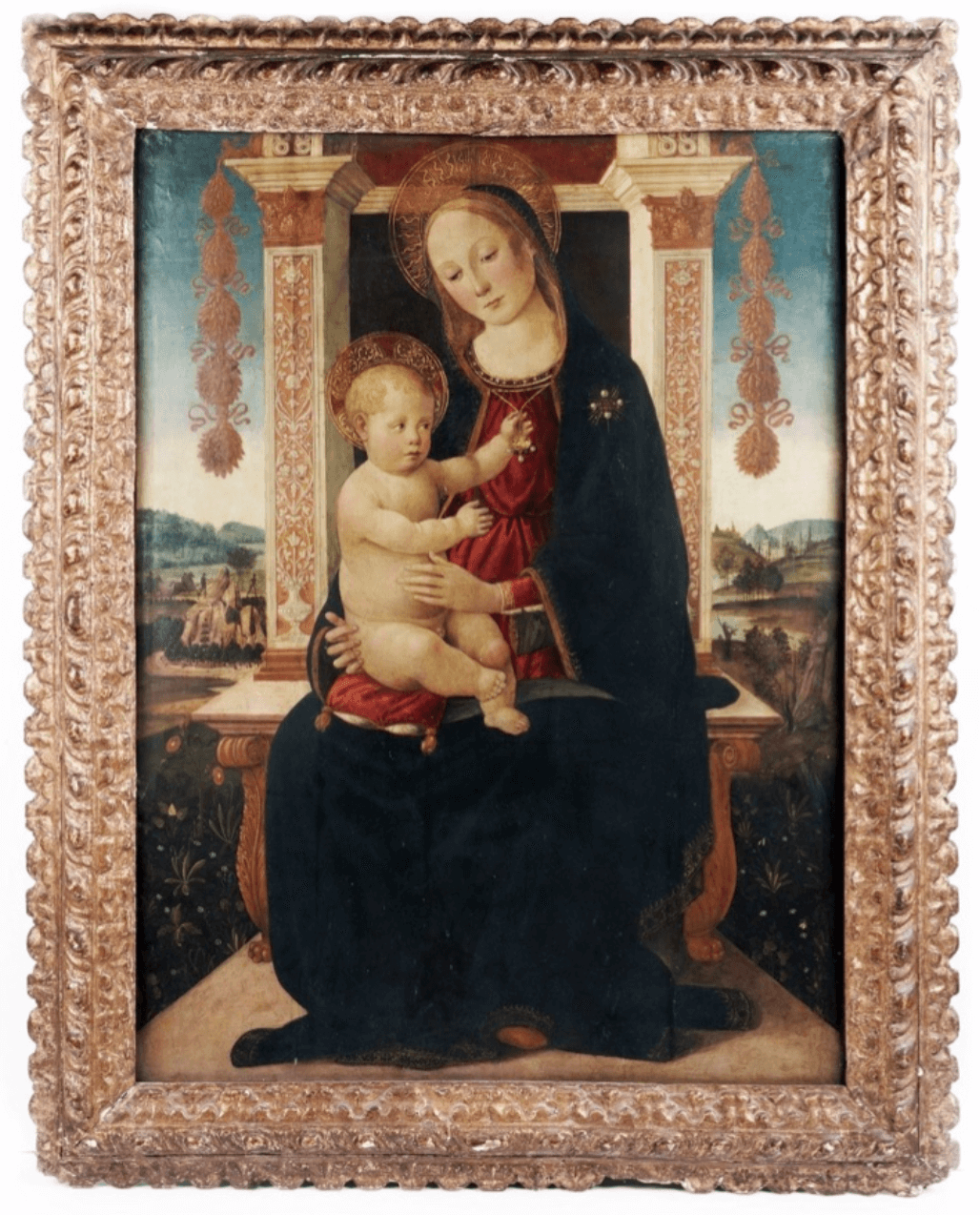
This year, an extraordinary Renaissance painting by the anonymous artist known as the Master of Marradi was discovered in a remote farmhouse near Bellingham, England. The masterpiece had once been a prominent piece in the collection of renowned 19th-century art collector Charles Butler. After his death, it was sold to a relative and remained unseen by the public for over a century. This past July, the artwork was auctioned at Anderson & Garland in Newcastle, fetching £47,000.
This oil on panel, titled Madonna and Child Enthroned, was initially attributed to Pinturicchio, but later correctly identified as a work by the Master of Marradi. The highly skilled Tuscan artist, named after the location where many of his pieces are found, was active in the late 15th to early 16th centuries and created altarpieces, tondi, and devotional panels. His work reflects the influence of prominent contemporaries such as Botticelli and Filippino Lippi in his compositional sobriety combined with delicate linearism, evident in the gracefully depicted faces and draperies of the figures, as well as in intricate details like the Virgin’s transparent veil.
This rediscovery raises the possibility that more of the Master of Marradi’s works remain hidden, awaiting recognition. If you believe you may have a painting from this period that resembles the characteristics of this artist, we would like to hear from you.