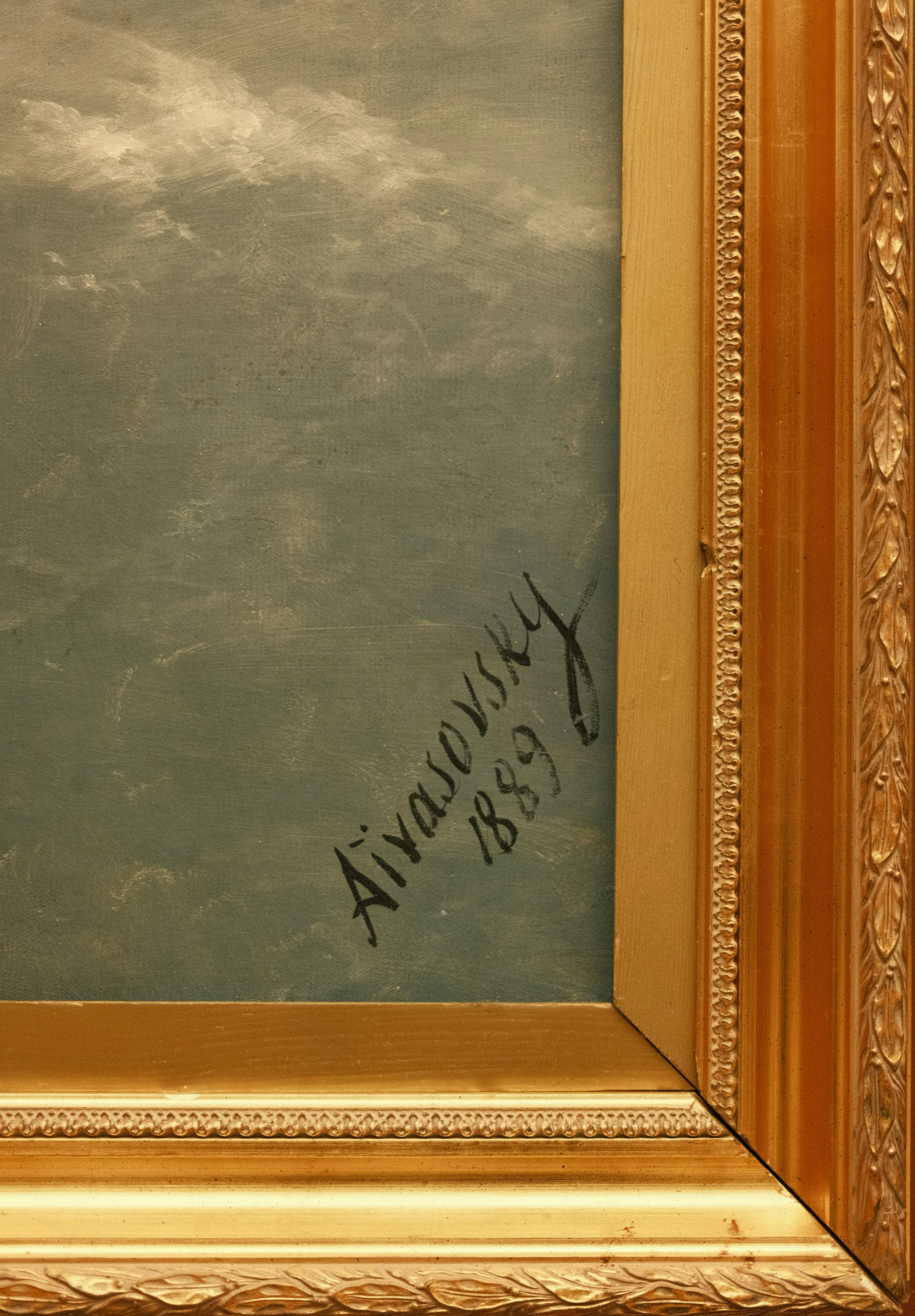
Art collectors, investors, and buyers place great value on signatures. But do they truly prove an artwork's authenticity? Art galleries have always responded to demand. If a painting wasn’t signed, they often signed it themselves.
Edgar Degas, for instance, often refused to sign his paintings because he never felt they were truly finished. His dealer, eager to sell, would take works from his studio and sign them himself. Similarly, many artists from eras when signing was uncommon later had their works posthumously signed by galleries.This is why there are genuine Rembrandts with forged signatures.
Even the great Michelangelo signed only one sculpture in his lifetime—La Pietà—yet his authorship of many unsigned works remains unquestioned.
In the field of authentication, signatures don’t mean much. A good-looking signature doesn’t prove authenticity. A bad-looking signature doesn’t mean a painting is fake. And if a painting is unsigned? In fact, unsigned works often have a higher chance of being genuine—since forgers rarely omit a signature.
While forensic handwriting analysis plays a role in verification, it is just one piece of a much larger puzzle. True authentication relies on deeper examination, beyond the signature itself.
We have been authenticating artworks for 25 years, and we are proud to say that we have never made a mistake.

 Languages
 简体中文
 বাংলা
 slovenščina
 繁體中文(香港)
 català
 Bahasa Melayu
 Nederlands
 svenska
 繁體中文(台灣)
 čeština
 Íslenska
 norsk
 suomi
 dansk
 Bahasa Indonesia
 polski
 français
 eesti
 日本語
 português
 Türkçe
 Deutsch
 ქართული
 한국어
 română
 українська
 Italiano
 ελληνικά
 lietuvių
 Русский
 اردو
 اعربي
 עברית
 magyar
 Slovenščina