Pierre Jules Mene (1810-1892)
We Perform Pierre Jules Mene art authentication. Pierre Jules Mene appraisal. Pierre Jules Mene certificates of authenticity (COA). Pierre Jules Mene analysis, research, scientific tests, full art authentications. We will help you sell your Pierre Jules Mene or we will sell it for you.
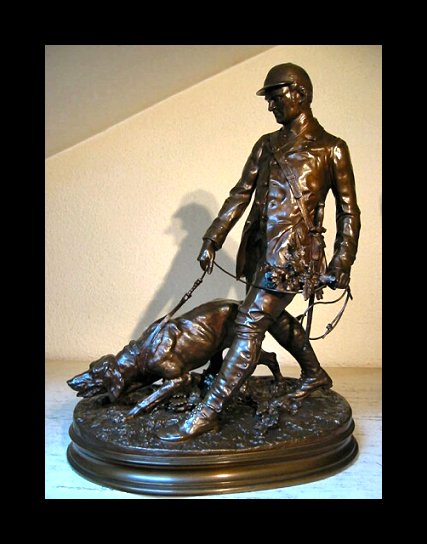
Pierre Jules Mene was born in Paris on March 25, 1810. Today, he is remembered as the most successful animal sculptor of his time. He was one of the most famous of a group of sculptors known as “Les Animaliers”. The story of Mene’s art beginnings is a fascinating one.
His father was a metal turner, and he taught his son to work with metal at an early age. Mene learned the principles of casting metal and earned a living making metal furniture accents and clock decorations. He also spent a lot of his time in Paris drawing. He did receive a bit of art instruction, but he never attended any noteworthy schools. In most ways, he taught himself the craft that would later make him famous. During this time period, he made numerous sketches of animals. These would later serve as blueprints from which to make his structures.
Mene’s first exhibit was in 1838 of a Dog and Fox cast in bronze. He exhibited annually at the Salons. Throughout his lifetime, he exhibited a couple of models each year. He received numerous awards for his work. His subjects of choice were horses and dogs.
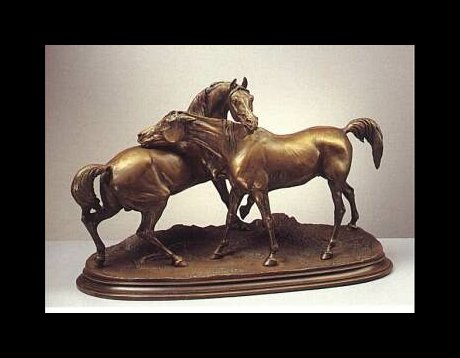
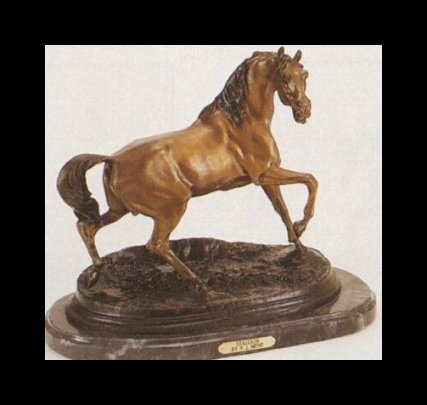
Mene’s bronze sculptures displayed animals in various aspects whether they are at play, hunting, or in still life. The best estimate of his body of work is that he modeled over 150 different subjects. The bronze casts he produced from these models are numerous, estimated in the thousands.
Unlike some artists who are known for their reclusive nature, Mene was an outgoing man who was known for his personality. He mingled with painters, musicians, and sculptors. As his career progressed, his bronzes were sold throughout Europe and America. His success grew, and he began to receive more and more recognition for his art. His son in law, Auguste Cain began to work in conjunction with Mene, and the two set the standard for this genre of art.
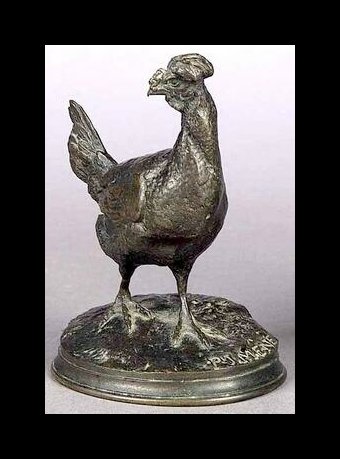
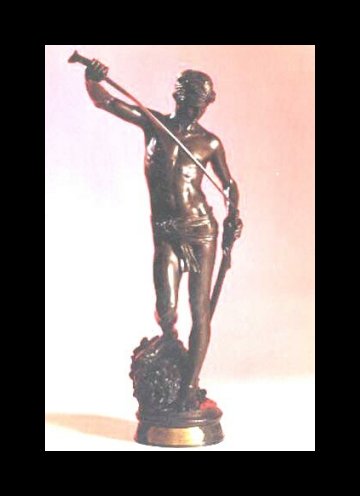
Although his work was produced in quantity, he was meticulous about making sure all the models and casts were perfectly preserved and taken care of. He was adamant that each bronze was as flawless as the first.
When he died in 1877, Auguste Cain continued to produce his work. He maintained the high standards of quality. Until 1879, he continued to produce works in Mene’s name.
When Cain died in 1892, production finally halted. Many of Mene’s models were sold to the Susse Freres foundry. Well into the 20th century, Mene’s bronzes were still cast and sold. They all bore the mark or seal.
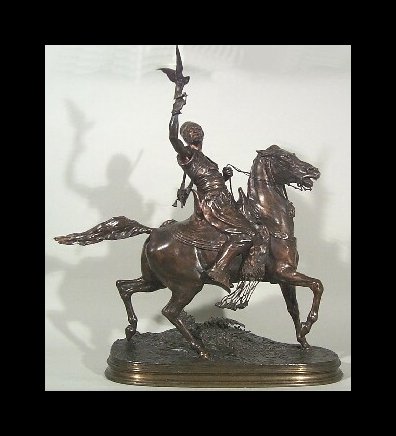
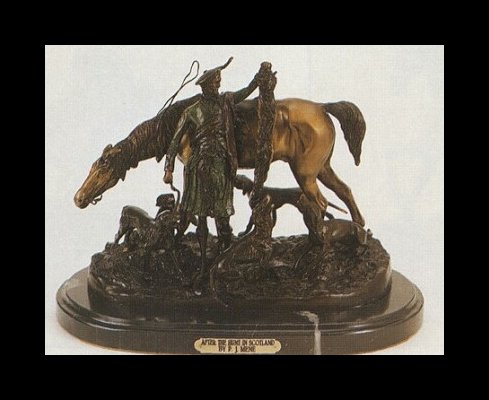
Although most of his pieces can be found at the Louvre or other French museums, pieces have been uncovered elsewhere. His work was greatly admired on the British market, and some of the pieces have found their way to the United States.
Mene’s work has earned its rightful place in art history. His bronzes are known for their realism, detail, and flawless quality. The bronzes carry a timeless, classic appeal sure to be enjoyed by art enthusiasts for many years to come. If you suspect you may own a Mene, please contact us.