Gerardo Murillo (1875-1964)
Get a Murillo Certificate of Authenticity for your painting or a COA for your Murillo drawing or print.
For all your Murillo artworks you need a Certificate of Authenticity in order to sell, to insure or to donate for a tax deduction.
How to get a Murillo Certificate of Authenticity is easy. Just send us photos and dimensions and tell us what you know about the origin or history of your Murillo painting, drawing or print.
If you want to sell your Murillo painting, drawing or print use our selling services. We offer Murillo selling help, selling advice, private treaty sales and full brokerage.
We have been authenticating Murillo and issuing certificates of authenticity since 2002. We are recognized Murillo experts and Murillo certified appraisers. We issue COAs and appraisals for all Murillo artworks.
Our Murillo paintings, drawings and print authentications are accepted and respected worlwide.
Each COA is backed by in-depth research and analysis authentication reports.
The Murillo certificates of authenticity we issue are based on solid, reliable and fully referenced art investigations, authentication research, analytical work and forensic studies.
We are available to examine your Murillo painting, drawing or print anywhere in the world.
You will generally receive your certificates of authenticity and authentication report within two weeks. Some complicated cases with difficult to research Murillo paintings or drawings take longer.
Our clients include Murillo collectors, investors, tax authorities, insurance adjusters, appraisers, valuers, auctioneers, Federal agencies and many law firms.
We perform Gerardo Murillo art authentication, appraisal, certificates of authenticity (COA), analysis, research, scientific tests, full art authentications. We will help you sell your Gerardo Murillo or we will sell it for you.
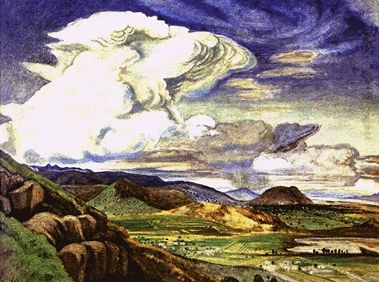
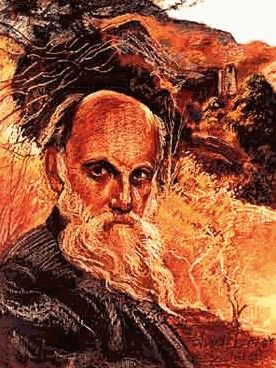
Gerardo Murillo (Dr. Atl) is a well-known Mexican painter, printmaker, writer, theorist and politician. Dr. Atl adopted his pseudonym in exchange for his given name, Murillo in 1902. ‘Dr. Atl’ means ‘Doctor Water’ in the Náhuatl language.
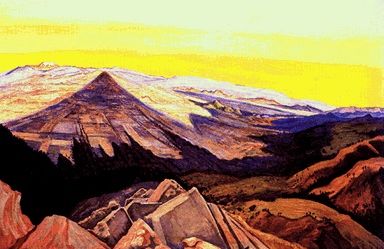
Dr. Atl began his studies in Guadalajara before going to the Academia de San Carlos in Mexico City. Dr. Atl excelled at the Academy and received a grant from the President Porfirio Diaz to paint in Europe. Dr. Atl travelled to many countries, learning about avant-garde styles and concepts. Dr. Atl spent most of his time in Rome, studying law, philosophy and classics like Michelangelo.
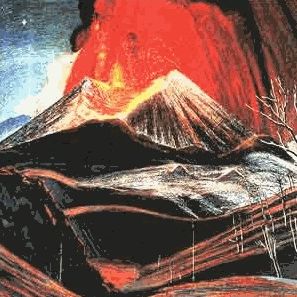
In Europe Dr. Atl also became involved in politics, joining the Socialist Party in Italy and worked for a periodical Avanti. It was in Italy that Murillo changed his name to Dr. Atl.

Dr. Atl returned to Mexico before the start of the Mexican Revolution, seven years later. Dr. Atl joined the revolutionary movement as a muralist and led exhibitions of Diego Rivera and Francisco Ponce de Leon.
Dr. Atl went to Paris to analyze the politics of Mexico and founded a journal, writing about the social and political issues of Mexico. Dr. Atl supported constitutionalists, leaning towards a biblical socialism.
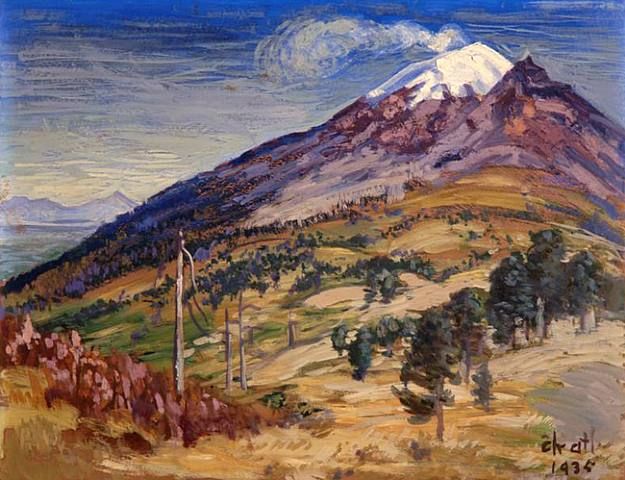
Dr. Atl did some portrait painting, but he was a prolific and innovative painter of landscapes. He used ‘atl colors’, which he made from wax crayons and pigments on wood and board instead of canvases. Dr. Atl often painted the many volcanoes surrounding Mexico City. Dr. Atl loved to be in nature and often climbed the volcanoes Popocatepetl and Iztaccihuatl. Dr. Atl wrote a book “How a Volcano is Born and Grows-Paricutin”, describing the eruption of Paricutin. Unfortunately, his contact with volcanoes gave him a disease, which caused one of his legs to be amputated.
Dr. Atl’s writings “Stories of All Colors” about the Mexican Revolution and “The Pearl” are highly acclaimed pieces of literature. “The Pearl” is known to have inspired a novella by John Steinbeck.
Dr. Atl received many awards for his paintings and writings. Dr. Atl’s paintings are in museums and collections all over the world. Do you think you own a painting by Dr. Atl? Contact us. We are the experts.