Samuel Palmer(1805-1881)
We Perform Samuel Palmer art authentication. Samuel Palmer appraisal. Samuel Palmer certificates of authenticity (COA). Samuel Palmer analysis, research, scientific tests, full art authentications. We will help you sell your Samuel Palmer or we will sell it for you.
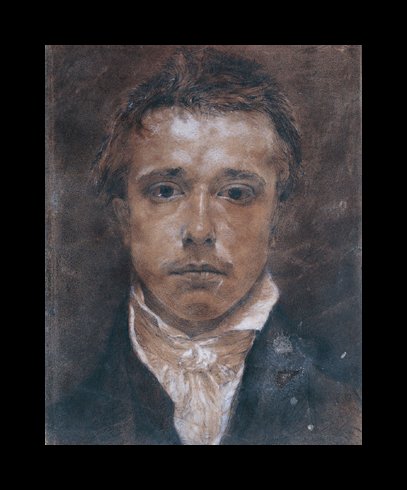


Samuel Palmer was a 19th century Romantic painter, etcher, printmaker and writer. He was born in London and was the son of a bookseller and Baptist minister. Palmer began to paint churches as a boy and despite the fact that he had little formal training; he exhibited with the Royal Academy at the very young age of 14.
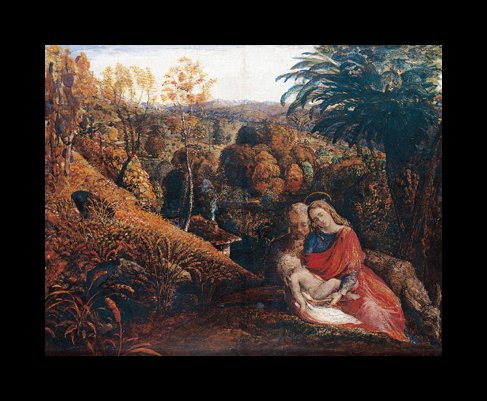
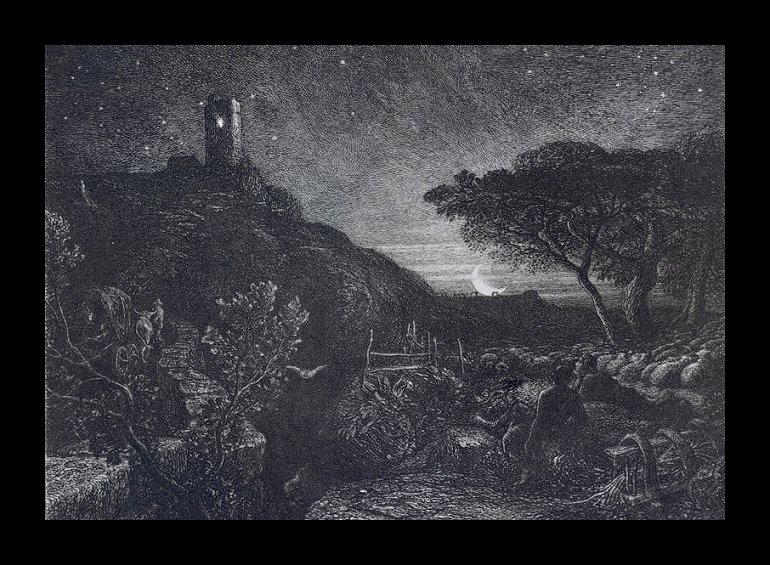
Palmer’s earliest works were inspired by Turner, and also William Blake after their meeting in 1824. For nearly a decade, Palmer painted in a style similar to Blake’s and today, art critics hail these pieces as his best. In generally, these early Blake-inspired paintings were of landscapes in north Kent. It is said that these paintings were kept secret to only Palmer and a few of his very close friends. They have been described as “mystical” and highly unconventional for his day, and would have certainly stood out among works from his contemporaries.

During this time, Palmer had rented a run-down cottage that was nicknamed “Rat Abbey,” where he lived until 1835. While he was living in “Rat Abbey,” Palmer met with another group of artists that also were under Blake’s influence who called themselves “The Ancients.” Among them were artists Edward Calvert and George Richmond, these two being probably among the select few to ever have viewed his Shoreham landscapes.
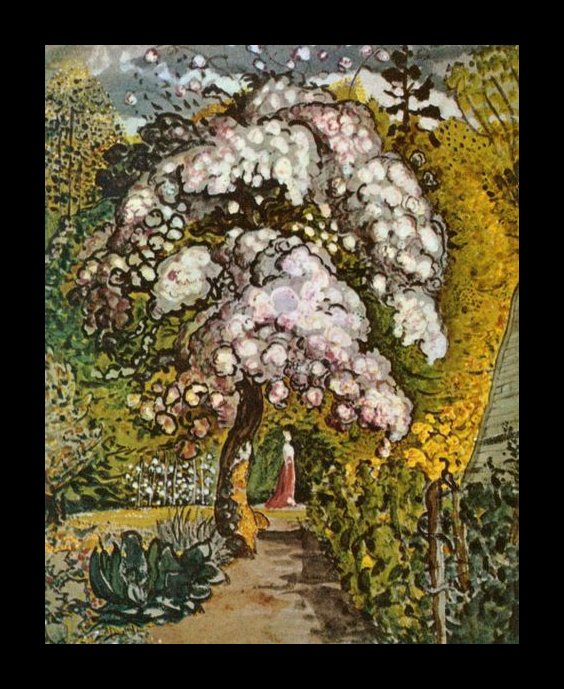
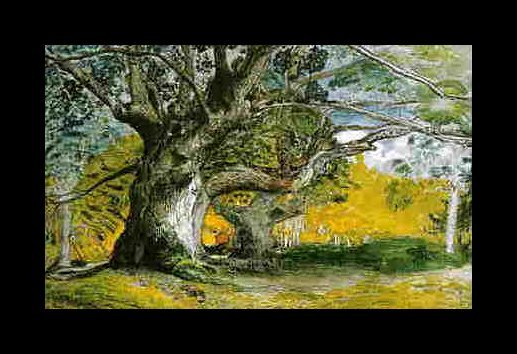
Upon returning to London in 1835, Palmer married and began to create far more atypical landscapes and city scenes. During this time, he began to sketch around Wales and Devonshire as well, creating peaceful scenes of sunsets and the countryside. However, these peaceful scenes of the rural English countryside would be shattered by swing riots of the 1830’s. Discontent in his surrounding environment and money running low, Palmer and his wife decided to take a belated honeymoon to Italy where he could create more commercial scenes.
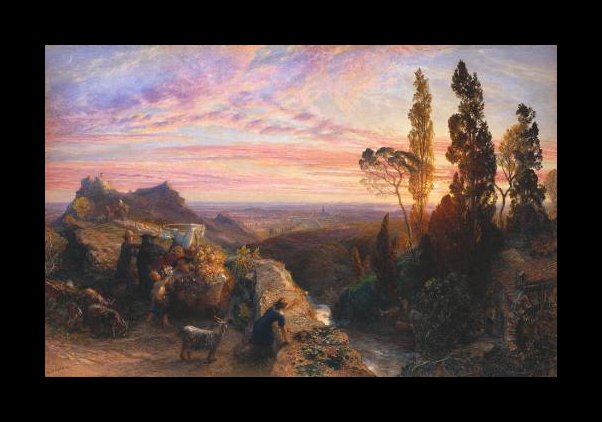
Once in Italy, Palmer’s palette became distinctively lighter, and in some art critics opinion, almost too bright.
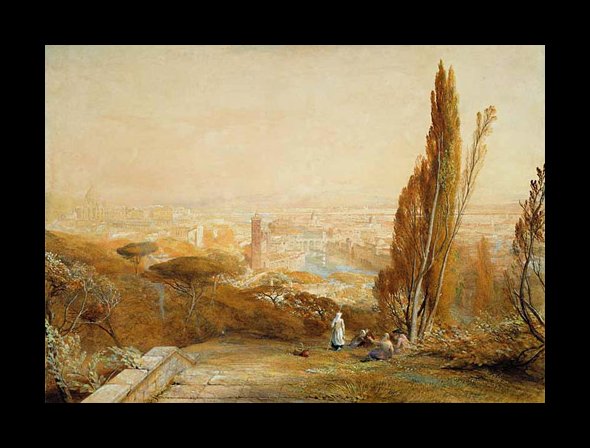
His time in Italy produced a number of quality sketches for inspiration on future paintings once he and his wife returned to London. However, after his return he found limited success among his patrons. To make matters worse, Palmer discovered upon his return that his brother had sold all of his early paintings, and he was forced to pay a large sum to have them returned. How many of these paintings was palmer able to secure again? Could there be a few paintings that were not returned to the artist?
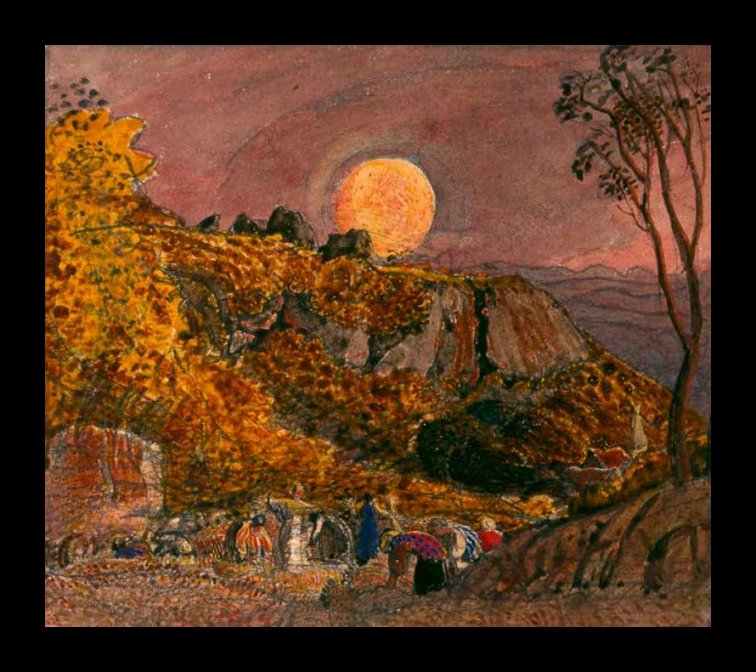
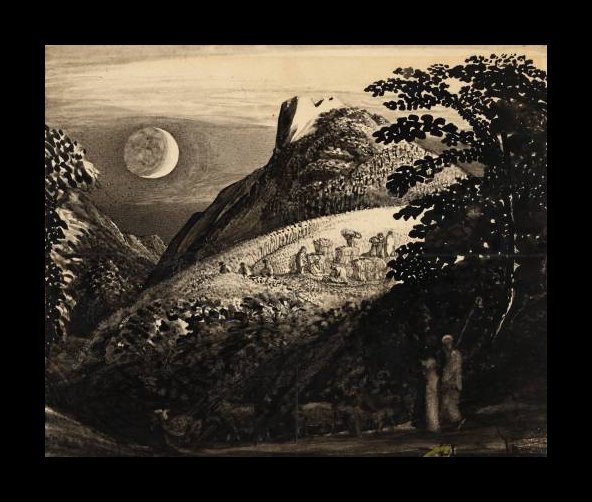
Palmer became a full member of the Water Colour Society in 1854, which gave him the motivation to continue painting. Towards the end of his career, Palmer took to teaching as many artists did, which in turn took away from time spent on creating his own art. Palmer did, however, achieve some amount of success in the art world for his later landscapes, mostly due to the fact that he incorporated some of the mystical qualities of his early Shoreham landscapes. Some of Palmer’s best works are said to be illustrations for poems by Milton as well as his etchings. Palmer only found meager success and financial security towards the end of his days, which were shrouded by sadness over the death of his eldest son.

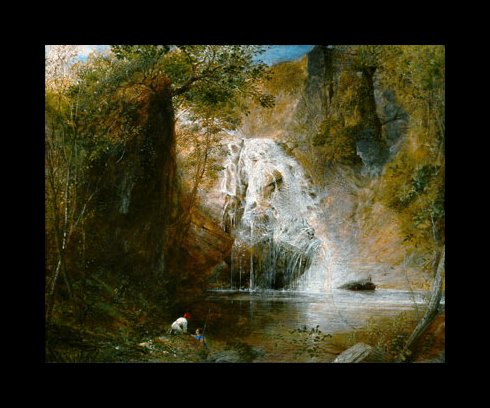
After Palmer’s death in 1881, he was all but forgotten by the art world and art collectors. New styles of painting were emerging, and his mystical landscapes had become passé. In 1909, Palmer’s surviving son destroyed paintings, sketches, notebooks and an unknown amount of original arts by his father in order to “save it from a more humiliating fate.”
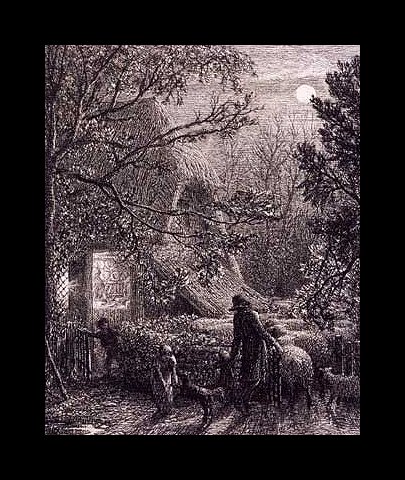
Interest in Palmer’s work began to resurface when the curator for the Victoria and Albert Museum, Martin Hardie, organized a showing of his drawings, etchings and wood cuts. However, it wasn’t until the 1950’s that Palmer’s work truly became noticed for its distinct quality. Today his Shoreham landscapes still have a dramatic effect on English artists and have inspired the works of many. His work even inspired a resurgence of landscape printmaking at the Goldsmith’s College in 1920. In 2006, The Metropolitan Museum of art ran the first large retrospective of his work, forging an even larger interest in his pieces in the new millennia.
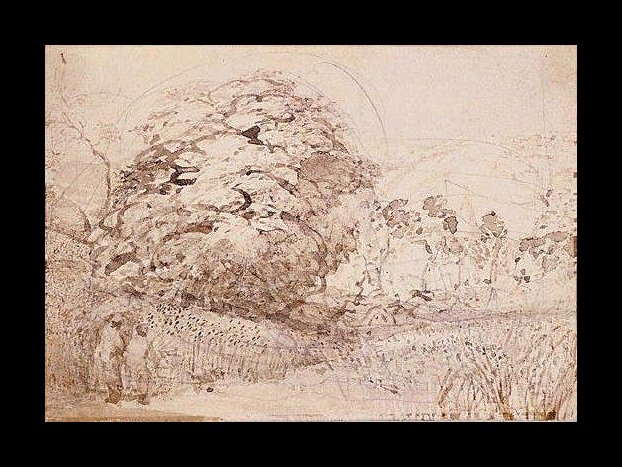
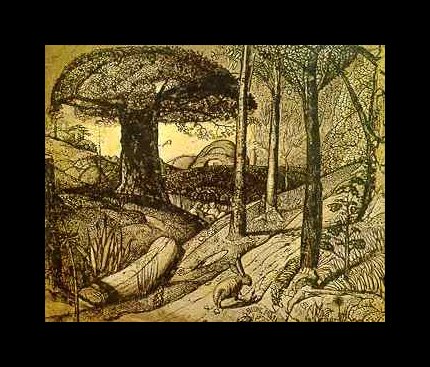
Many of the existing works by Palmer today may have been done by the art forger Tom Keating. However, art historians note that these were crudely recreated or mimicked and thus, could be easily spotted. Today, Palmer’s work is housed in public and private collections around the world, and perhaps in your own home.
Still wondering about a British landscape in your family estate? Contact us…it could be by Samuel Palmer.