Lucio Fontana ( 1899 – 1968 )
Luis Fontana art authentication. Luis Fontana appraisal. Luis Fontana certificates of authenticity (COA). Luis Fontana analysis, research, scientific tests, full art authentications. We will help you sell your Luis Fontana or we will sell it for you.
This painter and sculptor, son of the Italian sculptor Luis Fontana, was born in Rosario (Santa Fe province, Argentina), on February 19, 1899.
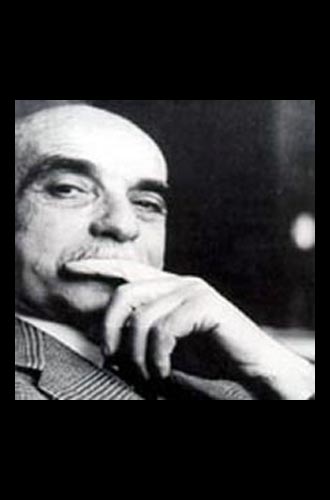
His work is considered controversial, as is his thinking, which influenced both Italy and Europe.
At the age of six he went to Italy. There he studied at the Carlo Cattaneo Technical Institute and at the Brera Academy in Milan (1920). In 1917, he enlisted in the Italian army and fought in World War I. In 1921 he returned to his homeland, where he spent seven years. There he worked as a sculptor with his father, until in 1924 he opened his own studio.
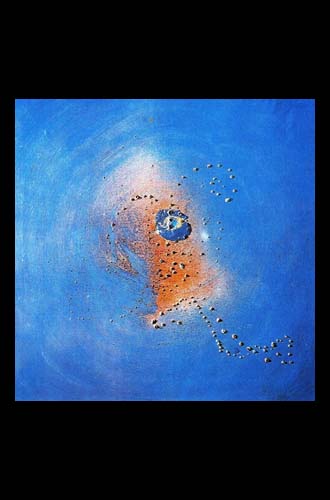
His first commissions were the monument to Juana Blanco (Salvador-Rosario cemetery), in 1926, under the influence of Maillol (in modeling and composition).
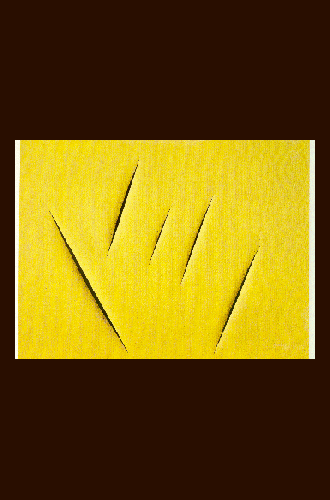
In 1928 he returned to Italy, and entered the Brera Academy again, where he had Adolfo Wildt as his teacher. He then explores all aspects of the subject until he reaches a refined art. Two years later he will be co-founder of the group of the Italian Abstracts and at the same time presents his first exhibition, organized by the Il Milione Gallery, in Milan.
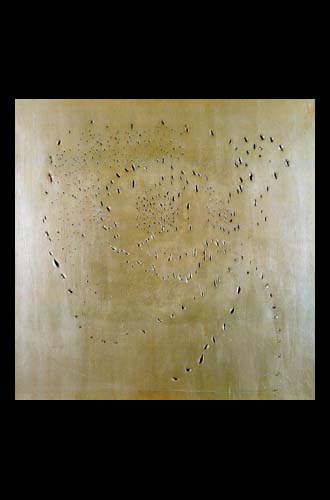
In the 1930s he managed to break with the academic tradition and joined the Milanese abstract movement, allowing himself to be influenced by Futurism.
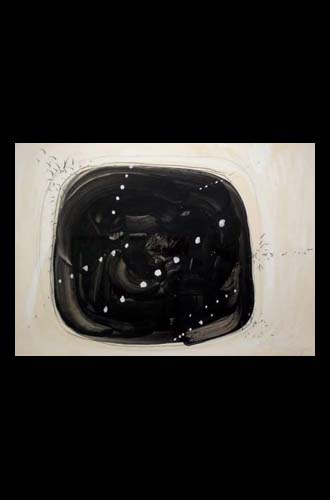
Between 1934 and 1939 he lived in Paris, where he met Miró, Brancusi and joined the Abstraction-Creation group. At that time he made reliefs in terracotta, gravestones engraved in colored cement and ceramic sculptures (Still Life).
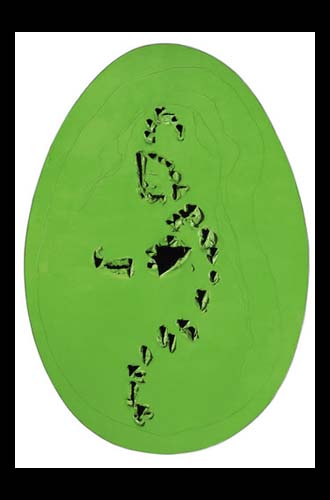
fontana concetto In 1939 he returned to Argentina, abandoned abstraction and began to dedicate himself to figurative sculpture with an expressionist tendency and launched an “artistic protest” against the war. In 1946 he founded the Altamira academy and unveiled the White Manifesto, which heralds the end of the painted canvas and the beginning of a mobile and dynamic art as well as a change of background and form. 1963
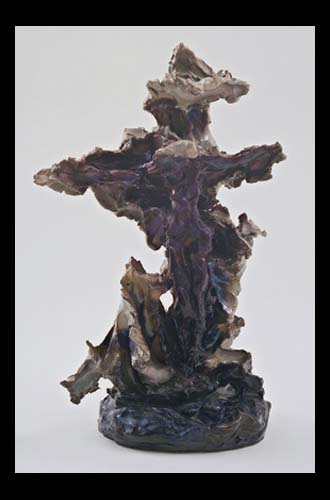
The following year he returned to Milan, where he founded the space movement. That same year he wrote his first Space Manifesto, then he made three more: the second (1949), third (1950) and fourth (1951). Starting in the late 1940s, Lucio Fontana composed neon arabesques, in order to create a “space atmosphere”. Thus he announces the end of art, paints interstellar abstractions and makes monochrome. Then, in order to “open the space”, he perforates the canvases or tears them with a knife.
In the 1960s he returned to simple forms, painted or sculpted or to object sculptures.
Lucio Fontana passed away on September 7, 1968 in Varese (Italy).