Rik Wouters, 1882-1916, Belge
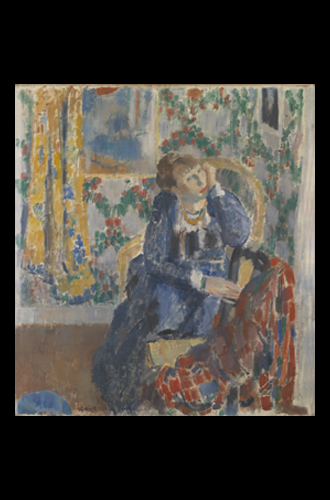
La Dame au Collier Jaune (1912)
Hendrik Emil (aka Rik) Wouters was a Belgian Fauvist painter and sculptor, known for his depictions of female figures going about their household chores, as well as for his self-portraits.
Born in 1882, he began his apprenticeship at the age of twelve, in the studio of his father, a furniture sculptor and decorator. In 1897, he integrated studies of sculpture at the Academy of Fine Arts of Mechelen, before joining that of Brussels, in 1900. Binding friendship with Fernand Verhaegen, he followed in particular the course “Sculpture according to nature ”by Charles Van der Stappen. It was there that he met the professional model whom he made his wife and his lifelong muse: Hélène Duerinck, known as Nel. The couple’s precarious finances and Nel’s tuberculosis forced them to settle in rue de la Sapinière, in Boitsfort, in the Brussels suburbs, a stone’s throw from the Forêt de Soigne.
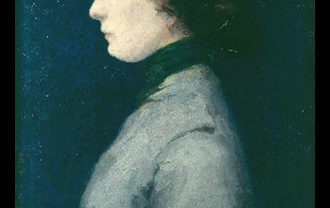
Portrait of a Woman in Gray (1904-1905)
Already experiencing some success (he had obtained a prize in the Godecharle competition with his sculptureReverie), Wouters then made a complete artistic turnaround, embarking on painting, as an autodidact. Working first with a knife, he followed in Ensor’s footsteps, whose treatment of light he admired in his bourgeois interiors. The influence of the master is palpable in The Lady with the Gray Gloves. Seeking to achieve maximum transparency, he used particularly absorbent canvases and diluted his colors to the maximum, which gave his paintings a certain coldness and a matt effect, as in Summer morning, which he waxed. He drew constantly, often on cardboard; the paintings coming back to him too dear.
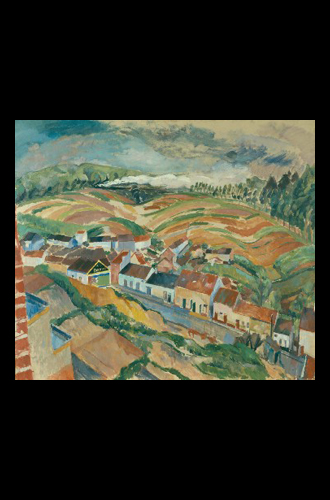
Landscape at Boitsfort (1914)
In 1911, Galerie Georges Giroux in Brussels signed an exclusive contract in Wouters. By taking the opportunity to make artistic stays in Paris and Cologne, he discovered, first on black and white reproductions, the canvases of Cézanne and Van Gogh, as well as other impressionists such as Sisley, Monet, Renoir or Degas. Returning to less absorbent canvases and colors that gained in brilliance, he thus made himself the representative of Brabant fauvism. The dynamism of itsPortrait of Ernest Wynarts (1912) reminds us of Matisse.
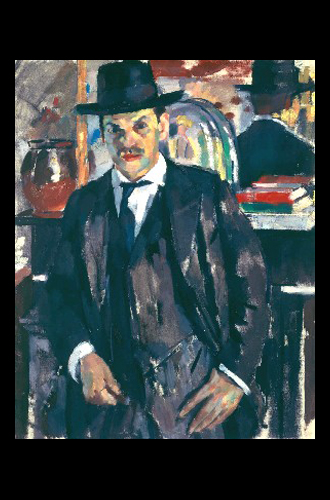
Portrait of Simon Lévy (undated)
Conscripted during World War I, he was held in a detention camp in Amesforth, the Netherlands, where he worked to ward off the horrors of war by depicting the daily life of the camp. Upon his release, he battled cancer of the jaw which died out after several months of suffering. His last operation having cost him an eye and part of his face, he wore a blindfold, which he represents in his Self-portrait with a black band.
Wouters died in Amsterdam in 1916, at the age of 33, and remains particularly known for his sculptural work, especially for hisMad Virgo (1910), inspired by dancer Isadora Duncan.